ESP – ENG
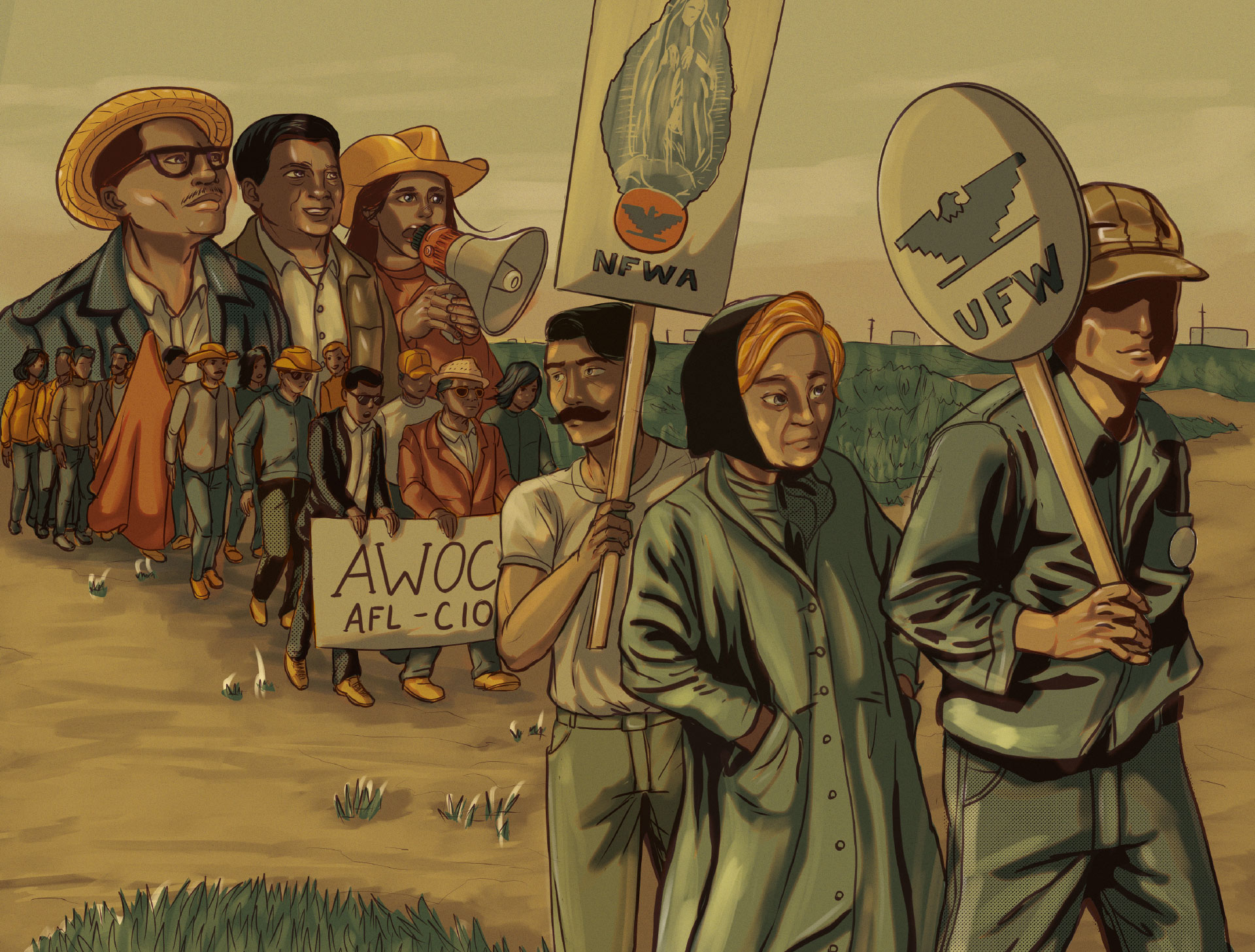
Delano, California, was the stage for one of the most important and memorable labor actions in US history.
On September 8, 1965, Filipino workers from the Agricultural Workers Organizing Committee (AWOC), with Larry Itliong as one of their main leaders, began to massively walk out of vineyards in Delano. They protested against awfully low pay, lack of health insurance and pensions, and restrictions against unionizing.
One week later, they were joined by the mostly-Mexican National Farmworkers Association (NFWA). Led by César Chávez, NFWA members rejected the artificial Filipino-Mexican rift to join a common cause. In 1966, the AWOC and the NFWA joined to form the United Farm Workers (UFW) union.
The Delano grape strike involved acts of nonviolent resistance, community organizing, marches and widespread consumer boycotts. Despite provocations from grape owners, the workers held firm for years and their struggle gained national notoriety.
Finally, in 1970, major grape growers yielded in the face of mounting losses. The result was a collective bargaining agreement that benefited more than 10,000 workers, with significantly improved pay and labor conditions.
César Chávez became one of the most recognized leaders of rural workers’ struggles in the US, and the Delano Grape Strike was a precedent for further actions in subsequent years.
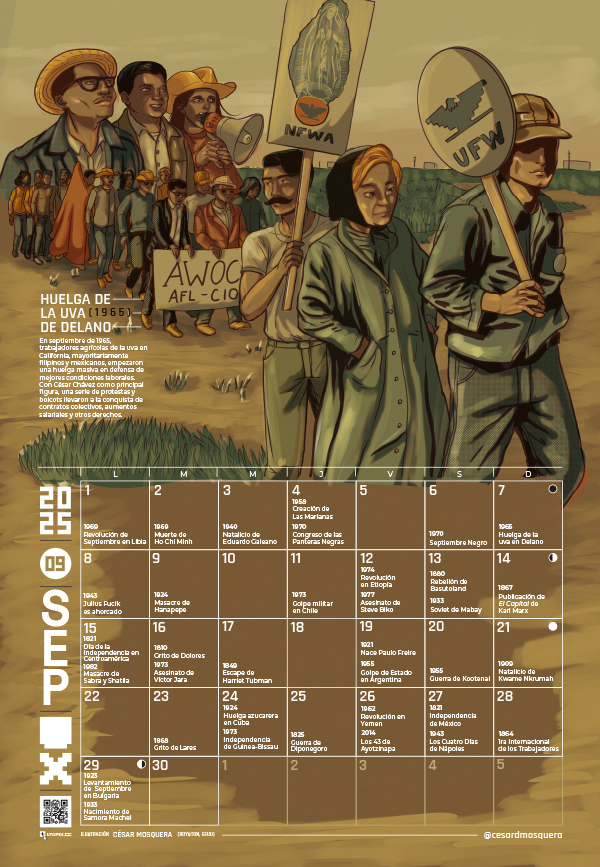
Click here to download the printable version of the calendar and hang it on your wall.
Text: Ricardo Vaz. Illustration: César Mosquera.